
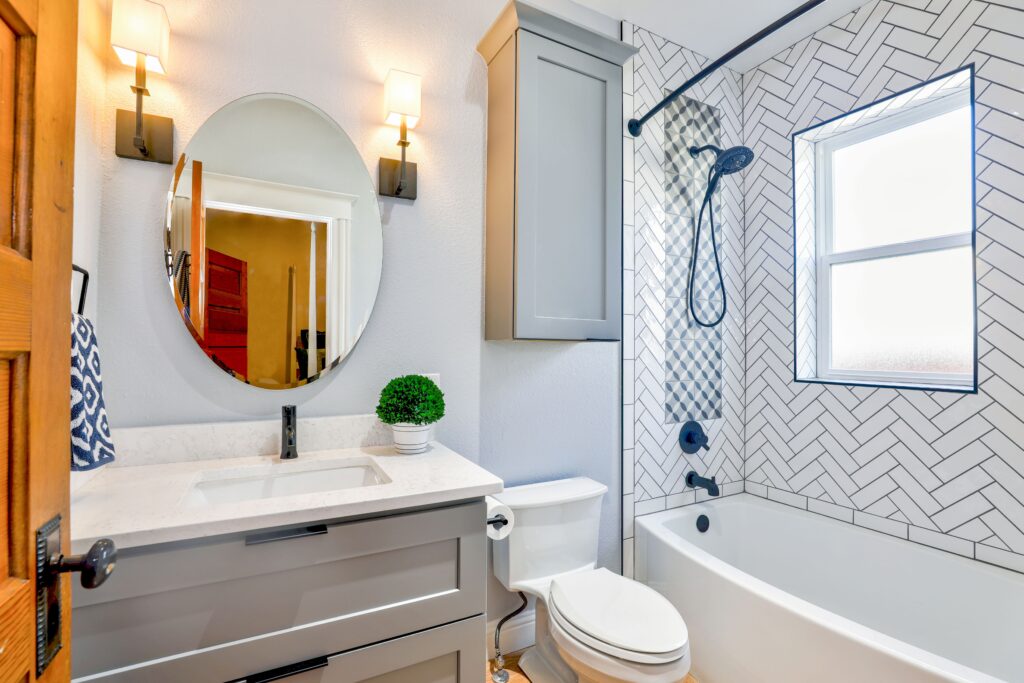
A bathroom renovation is one of the highest-return home improvement projects you can undertake. According to industry data, a mid-range bathroom remodel returns roughly 60–70% of its cost in added home value. But without proper planning, costs can spiral fast. Here’s a comprehensive guide to starting your renovation the right way.
Step 1: Define the Scope
Before you talk to a single contractor, decide what kind of renovation you’re doing. There are three levels: a cosmetic refresh (new fixtures, paint, accessories — $1,500–3,000), a mid-range renovation (new vanity, toilet, tile, lighting — $6,000–15,000), or a full gut renovation (everything replaced including plumbing, layout changes, custom tile — $15,000–40,000+). Knowing your scope prevents scope creep and budget shock.
Step 2: Set a Realistic Budget
A common budgeting mistake is pricing only materials and forgetting labor, permits, and surprises. A good rule of thumb: labor typically equals 40–60% of total project cost. Always build in a 15–20% contingency buffer for unexpected issues like water damage, outdated plumbing, or mold discovered behind walls.
Step 3: Choose Fixtures Before Tile
Your vanity, toilet, and shower/tub determine the layout and plumbing rough-in locations. These decisions need to be made before tile is selected, because tile is cut and installed around the fixtures — not the other way around. Finalizing fixtures first also helps you establish a style direction that makes tile and paint selection much easier.
Step 4: Prioritize Waterproofing
Waterproofing is the most critical — and most commonly cut-corner — part of any bathroom renovation. Improper waterproofing behind tile leads to mold, structural damage, and costly repairs down the road. Always ensure your contractor uses a proper waterproofing membrane in wet areas, and don’t accept shortcuts here regardless of budget pressure.
Step 5: Think About Ventilation
A bathroom without adequate ventilation is a bathroom that will develop mold problems within a few years. If your renovation doesn’t include upgrading the exhaust fan, it should. Modern ventilation fans are quiet, efficient, and some include built-in humidity sensors that run automatically after showers.
Step 6: Hire the Right Contractor
Bathroom renovations involve plumbing, electrical, waterproofing, and tile work — all trades that require experience and licensing. The cheapest bid is rarely the best value. Ask for references, check past projects, and make sure your contractor pulls the necessary permits. At UST Kitchen & Bath, we handle the entire project under one roof with licensed tradespeople at every step.
Sample Budget Breakdown (Mid-Range Bathroom)
Vanity & sink: $800–2,500 | Toilet: $300–700 | Shower/tub: $1,000–4,000 | Tile (materials): $500–2,000 | Labor: $3,000–7,000 | Lighting & mirrors: $400–1,200 | Permits & misc: $500–1,000
Ready to get started? Contact UST Kitchen & Bath for a free in-home consultation and detailed project estimate.
Turning Your Plan Into a Project
Once you’ve worked through scope, budget, and fixtures, the next step is getting a firm, itemized quote — not just a rough estimate. Our bathroom remodeling team walks through each of the steps above with you in person, and uses 3D design previews so you can see your layout, tile, and fixture choices together before any demolition starts.
Bathroom Renovation FAQs
How long does a bathroom renovation typically take?
Timelines vary significantly based on scope — a fixture refresh is much faster than a full gut renovation with plumbing changes. We provide a project-specific timeline as part of your quote.
Do I need to move out during a bathroom renovation?
Most homeowners stay in their home during the project, though access to that specific bathroom will be limited while work is underway. If it’s your only bathroom, we can talk through scheduling options during your consultation.
What’s the best way to avoid going over budget?
Lock in your fixture and material selections before demolition starts. Mid-project changes are a common cause of budget overruns, so finalizing choices early — and getting an itemized quote — helps keep costs predictable.