
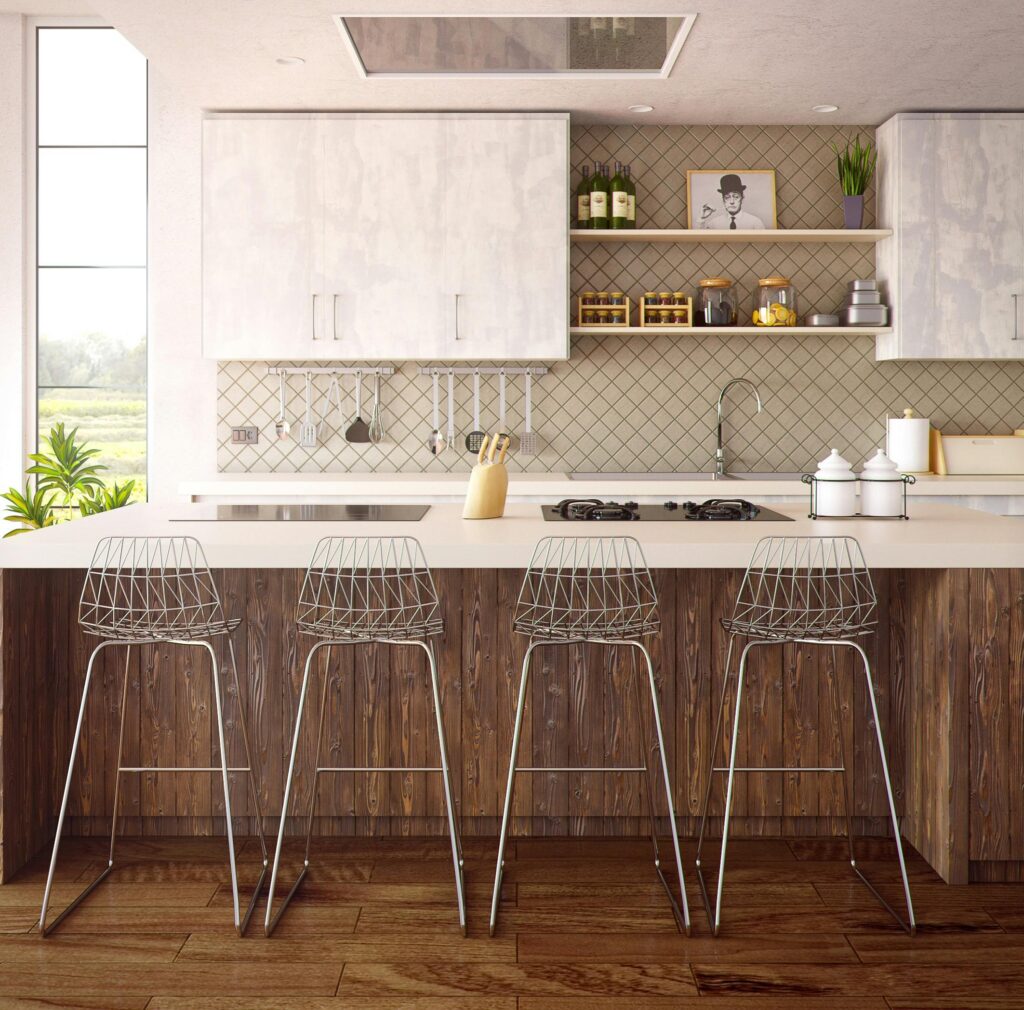
The open concept kitchen has been the defining layout trend of the past two decades. By removing the walls separating the kitchen from the dining and living areas, homeowners gain a more social, light-filled, and visually expansive space. But like every design decision, open concept living comes with real trade-offs — and it’s not the right choice for every household. Here’s an honest look at both sides, plus practical design tips if you decide to go open.
The Case For Open Concept
Better flow for entertaining. When you’re cooking and hosting simultaneously, an open layout lets you stay connected with guests rather than disappearing into a closed kitchen. You can prep, cook, and converse without missing a moment of the gathering.
More natural light. Removing walls allows light to travel freely through the space. A single large window in the living area can now illuminate the kitchen as well, reducing the need for artificial lighting and creating a brighter, more welcoming environment throughout the day.
Easier family supervision. Parents cooking in an open kitchen can keep an eye on children doing homework at the dining table or playing in the adjacent living room — a practical benefit that matters daily.
Stronger resale appeal. Open concept layouts consistently rank among the top features buyers look for, particularly in the under-45 demographic. Opening up a closed kitchen can meaningfully increase your home’s marketability.
The Case Against Open Concept
Cooking smells travel everywhere. An open kitchen means aromas — good and bad — spread immediately throughout the living space. Investing in a high-performance range hood (600 CFM or higher) is non-negotiable if you cook frequently.
Noise has nowhere to hide. Dishwashers, blenders, and exhaust fans become part of the ambient sound of the entire living area. For households where people are working from home or putting children to sleep early, this is a genuine quality-of-life consideration.
The kitchen is always on display. An open layout means dirty dishes, cluttered counters, and mid-cook chaos are visible from the living room at all times. If you’re not naturally tidy, this can create ongoing stress. Some homeowners compromise with a partial wall or a large island that screens the kitchen workspace from the living area view.
Design Tips for a Successful Open Concept Kitchen
Use a large island to define zones. Without walls, you need other methods to signal where the kitchen ends and the living space begins. A generous island (at minimum 4 feet x 6 feet) creates a natural boundary that feels intentional rather than arbitrary.
Consistent flooring throughout. Using the same flooring material across the kitchen and living area (or at minimum, the same color tone) reinforces the openness of the space and prevents the eye from stopping at material transitions.
Align cabinet colors with your furniture palette. In an open layout, your kitchen cabinetry and living room furniture exist in the same visual field. Choosing complementary finishes — rather than treating them as separate decisions — creates a cohesive, designed feel rather than two rooms that happened to collide.
Invest in ventilation before anything else. Before selecting a tile, a countertop, or a light fixture, confirm your range hood and ventilation system are adequate for an open space. Retrofitting ventilation after the renovation is complete is expensive and disruptive.
Plan your lighting in layers. Open spaces need a layered lighting approach: ambient (recessed or ceiling-mounted), task (under-cabinet and island pendants), and accent (decorative fixtures). A single light source will leave parts of a large open space feeling dim and disconnected.
Is Open Concept Right for You?
The honest answer depends on your household. If you entertain frequently, have young children, and value a bright and social home environment — open concept will likely transform how you live. If you prefer a quiet home, cook complex meals daily, or prize visual separation between rooms — a thoughtfully designed semi-open layout with a partial wall or strategic island may serve you better.
At UST Kitchen & Bath, we’ve completed hundreds of open concept kitchen conversions across the Dallas-Fort Worth area. Our team handles structural assessment, design, permitting, and full build-out. Contact us today for a free consultation.
Planning an Open Concept the Right Way
Before any wall comes down, it’s important to know what’s inside it — plumbing, electrical, and ductwork all affect whether (and how) a wall can be removed, and whether it’s load-bearing changes the scope significantly. Our kitchen remodeling team can assess your layout and walk you through what’s realistic for your home. We also use 3D design previews so you can see how an open floor plan will look and function before committing to the work.
Open Concept FAQs
Can any wall be removed to open up a kitchen?
Not always. Whether a wall is load-bearing, and what plumbing, electrical, or ductwork runs through it, determines what’s possible and what it will cost. A professional assessment is the first step.
Does an open concept kitchen increase home value?
It can, particularly in markets where open layouts are in demand, but the return depends on your home, neighborhood, and how the rest of the space is finished.
How can I see what an open layout will look like before committing?
We use 3D design previews to show you a proposed layout — including sightlines, lighting, and furniture placement — before any demolition begins.